
How Do You Move a Piano Safely? A Complete Guide
Summary: How do you move a piano safely? Moving a piano safely requires meticulous planning, specialized equipment, heavy lifting techniques, and a profound understanding of the instrument’s complex anatomy. From securing the delicate internal mechanisms to navigating tight corners, steep staircases, and loading ramps, every single step must be executed with extreme precision. In this comprehensive guide, we will break down the exact step-by-step process, outline the essential tools needed for a damage-free move, and explain why trusting a nationwide specialist like Walter Piano Transport is the most secure choice for your prized instrument.
Understanding the Unique Challenges of Moving a Piano
Why You Should Never Treat a Piano Like Regular Furniture
When planning a move, many people make the critical mistake of treating a piano like a standard piece of heavy furniture, such as a sofa or a solid oak dining table. However, a piano is an incredibly delicate, high-tension musical instrument housed within a heavy wooden cabinet. The strings inside a standard piano are under roughly 18 to 20 tons of tension. A sudden drop or a severe jolt can not only severely damage the exterior wood veneer but also warp the cast iron plate, throw the instrument permanently out of tune, or snap the delicate internal action parts.
The Anatomy of a Piano: Weight, Balance, and Fragility
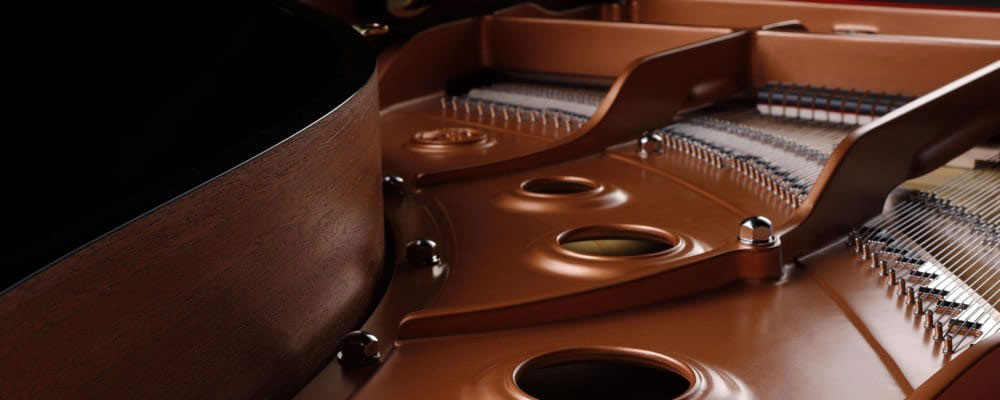
Understanding the anatomy of your instrument is the first step in learning how to move a piano safely. Pianos are deceivingly heavy and notoriously top-heavy. A small upright piano can weigh between 300 to 500 pounds, while a grand piano can easily exceed 1,000 to 1,500 pounds. The majority of this weight is concentrated in the cast iron harp (the plate that holds the strings) located near the back of an upright piano or the top of a grand piano. This uneven weight distribution makes them highly unstable when lifted. If a mover does not understand its center of gravity, the piano can easily tip over, leading to catastrophic damage and severe physical injury.
Essential Equipment for a Safe Piano Move
You cannot move a piano safely using just brute strength. Professional piano movers rely on an arsenal of specialized equipment designed specifically to handle the immense weight and awkward shape of the instrument. Below is a table detailing the essential tools required for a safe relocation.
| Equipment | Purpose in Piano Moving |
|---|---|
| Heavy-Duty Piano Dolly (4-Wheel) | Unlike a standard utility dolly, a piano dolly features non-marking rubber wheels and reinforced ball bearings designed to support up to 1,500 pounds without buckling. |
| Grand Piano Skid Board | A specialized, padded wooden board used exclusively for moving grand and baby grand pianos on their sides after the legs have been removed. |
| Moving Blankets and Padding | Thick, heavy-duty moving blankets protect the delicate wood finish from scratches, gouges, and temperature fluctuations during transit. |
| Locking Straps and Ratchet Tie-Downs | Used to secure the moving blankets to the piano, attach the piano securely to the dolly, and anchor the instrument to the walls of the moving truck. |
Step-by-Step Guide: How Do You Move a Piano Safely?
Step 1: Assessing the Path and Measuring Clearances
Before any heavy lifting begins, you must map out the exact route the piano will take from its current location to the moving truck. Measure the dimensions of the piano and compare them against every doorway, hallway, and staircase on the route. Remove all obstacles, rugs, and furniture that could cause a tripping hazard. If the piano is going down a flight of stairs, ensure the staircase can support the combined weight of the piano and the movers.
Step 2: Securing the Moving Parts
A piano contains a delicate keyboard and a heavy lid that must be secured. Close the keyboard lid The lid will be secured tightly when the piano is wrapped in moving blankets.
Step 3: Wrapping and Padding the Piano
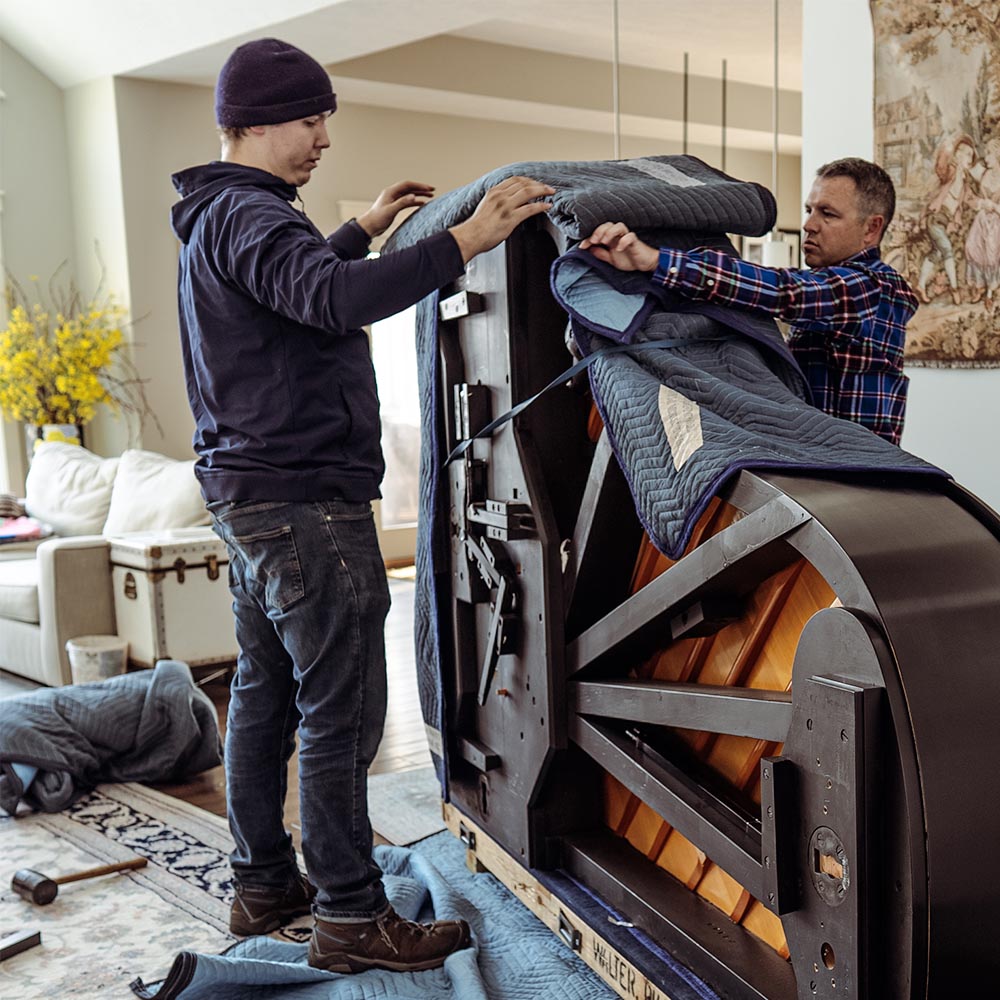
Wrap the entire body of the piano in heavy-duty moving blankets. Ensure that every corner and edge is thickly padded. The goal is to create a thick, protective cocoon that will absorb any accidental bumps against door frames or walls. Never let packing tape come into direct contact with the piano’s surface.
Step 4: Loading the Piano Onto the Dolly
Lifting a piano requires synchronized teamwork. For an upright piano, position the dolly at one end of the instrument. Carefully tilt the piano backward, slide the dolly underneath the center of gravity, and lower the piano onto it. Never lift a piano by its front legs; they are decorative and will snap under the immense weight. Secure the piano firmly to the dolly using heavy-duty ratchet straps.
Step 5: Navigating Stairs, Ramps, and Tight Corners
When rolling the piano, move slowly and steadily. If you must navigate stairs, the dolly must be removed. One team must be positioned below the piano to guide it, while the top team manages the weight. This is the most dangerous part of the move and is the primary reason why hiring experts is heavily recommended.
Step 6: Loading and Securing the Piano in the Truck
Push the piano up the truck’s loading ramp with extreme caution. Once inside the truck, position the piano against the back wall, ensuring the keyboard side is facing the wall for extra protection. Use heavy-duty ratchet straps to anchor the piano to the truck’s internal rails. It must not be allowed to shift, roll, or slide during transit, especially during cross-country transport.
Upright Pianos vs. Grand Pianos: Different Moving Strategies
Moving an Upright Piano
While upright pianos take up less floor space, their vertical, top-heavy design makes them incredibly prone to tipping. The center of gravity is high and located near the back. When moving an upright, the focus must be on keeping the instrument perfectly balanced on the dolly and ensuring that the movers maintaining the balance do not let the piano lean too far forward or backward while in motion.
Moving a Grand or Baby Grand Piano
Learning how to move a grand piano safely is an entirely different process. A grand piano cannot simply be rolled through a doorway. The piano is then carefully tilted onto its flat left side and placed onto a grand piano skid board. Once secured to the board, the remaining two legs are removed. The skid board is then placed onto a heavy-duty dolly. This requires highly specialized knowledge to ensure the internal action shifts correctly without causing permanent damage.
The Risks of DIY Piano Moving vs. Hiring Professionals
Common DIY Piano Moving Injuries and Damages
Attempting a DIY piano move to save money frequently results in disaster. Without the proper technique, individuals often suffer severe back injuries, pulled muscles, or crushed fingers and toes. Beyond personal injury, inexperienced movers often cause thousands of dollars in property damage, including gouged hardwood floors, shattered door frames, and torn drywall. More importantly, dropping a piano can irreparably shatter the soundboard or snap the cast iron plate, rendering the instrument completely unplayable and worthless.
Why Nationwide Piano Relocation Requires Specialized Movers
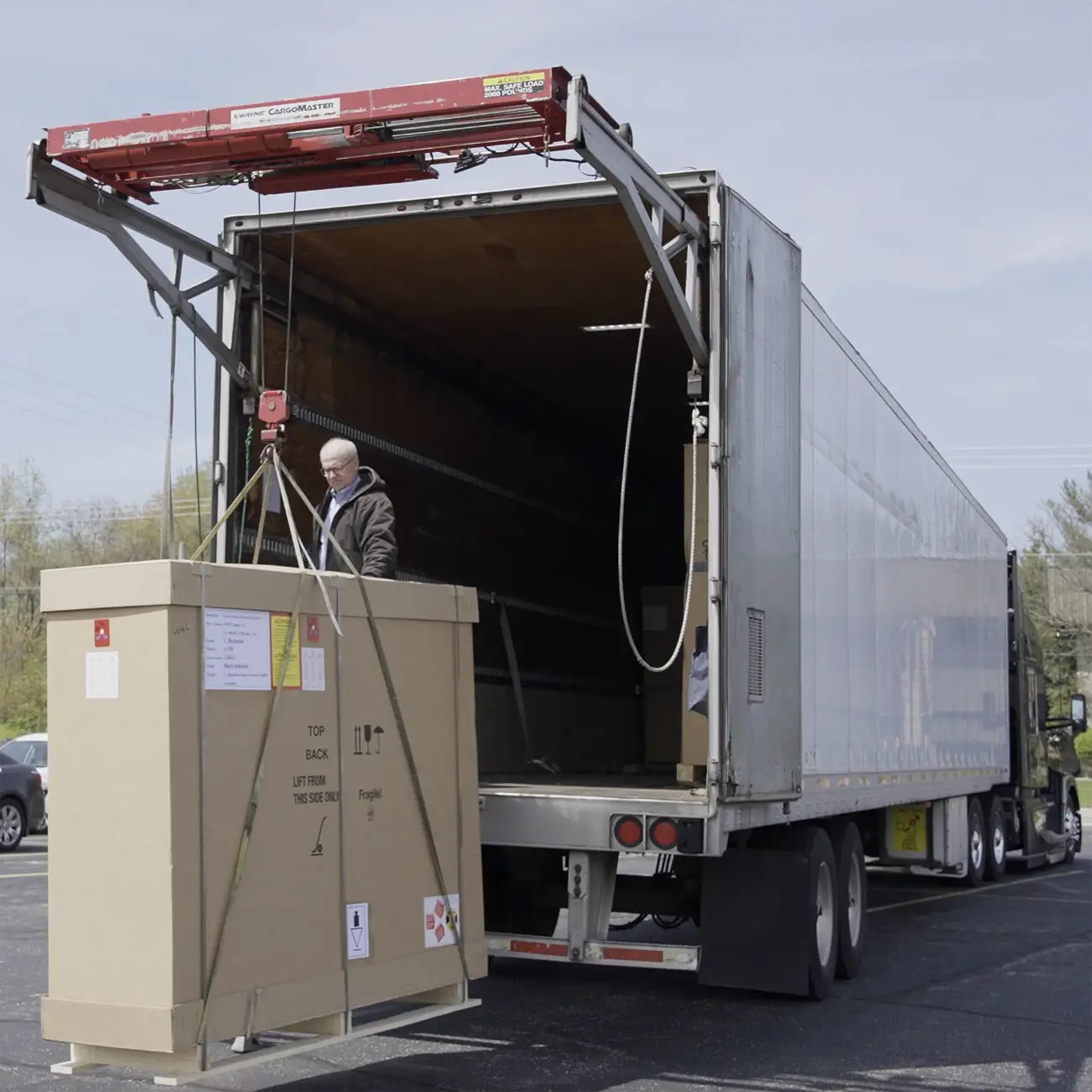
Standard household movers are great for boxing up dishes and hauling mattresses, but they often lack the specialized equipment, air-ride suspension trucks, and comprehensive insurance required for cross-country piano transport. Long-distance transit exposes the piano to varying climates, road vibrations, and potential shifting. Specialized piano movers understand how to minimize road shock and manage climate variations to protect your instrument’s structural integrity over thousands of miles.
Why Choose Walter Piano Transport for Your Cross-Country Move?
Our Professional Process at Walter Piano Transport
When you ask, “How do you move a piano safely?”, the definitive answer is to let the seasoned professionals at Walter Piano Transport handle it. With over 40 years of experience, more than 12.4 million miles traveled, and over 17,000 satisfied customers, we are a nationwide piano moving company specializing strictly in transporting pianos, organs, and harpsichords. We do not move standard household furniture—we are dedicated entirely to the safe relocation of your delicate instruments across the country. Our fleet of specialized trucks and our highly trained teams ensure that your piano is protected from the moment it leaves your home until it is safely set up in its new destination.
Bonus Services: Professional Cleaning and Player Piano Systems
\nWe go beyond just moving. While your piano is in our care, you can take advantage of our exclusive specialized services. We offer professional piano cleaning at the Walter Piano Factory. Regular cleaning preserves the finish, removes internal dust and grime, and enhances the instrument’s longevity. Additionally, if you want to bring your instrument into the modern age, we offer complete installations of cutting-edge Player Piano Systems, allowing your acoustic piano to stream your favorite music and entertain guests effortlessly, all controlled directly from your smart device.
Frequently Asked Questions
How much does it cost to move a piano safely?
The cost of moving a piano varies widely based on several distinct factors, including the type and size of the piano (upright vs. concert grand), the total distance of the move, the complexity of the extraction and delivery (e.g., number of stairs, tight turns, or crane requirements), and whether you require short-term or long-term climate-controlled storage. Long-distance, nationwide moves require custom quotes to account for specialized transport logistics. For the most accurate pricing, request a free quote directly tailored to your specific relocation needs.
Can a regular moving company move my piano safely?
While some standard moving companies claim they can handle pianos as part of a whole-house move, it is highly risky. General movers typically lack the specific heavy-duty dollies, grand piano skid boards, specialized training, and exact insurance policies needed to fully cover a high-value acoustic instrument. To guarantee absolute safety and peace of mind, you should always hire a dedicated piano transport service whose sole focus and expertise revolve around the safe handling of acoustic stringed instruments.
Do I need to tune my piano after moving it?
Yes, you will almost certainly need to tune your piano after a relocation. While the physical bumping of a professional move isn’t usually what throws the piano out of tune, the inevitable changes in ambient humidity and temperature during transit will cause the wooden soundboard to slightly expand or contract. This shifting directly alters the tension of the strings. It is highly recommended to wait about two to three weeks after the piano arrives in its new home to allow it to fully acclimate to the new environment before hiring a professional technician to tune it to concert pitch.